
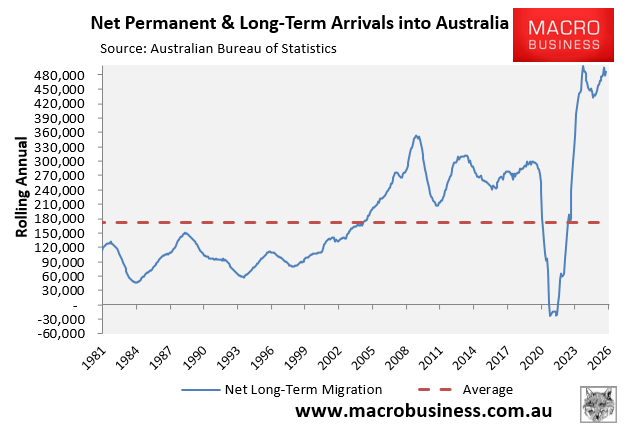
The Albanese government continues to import people into Australia at a rapid pace, with 40,400 net permanent and long-term (NPLT) arrivals in March, the second-highest March total on record, after 2023 (44,580).
In the year to March 2026, 486,300 NPLT arrivals landed in Australia, just below the all-time highs of 498,270 in February 2024 and 494,540 in January 2026:
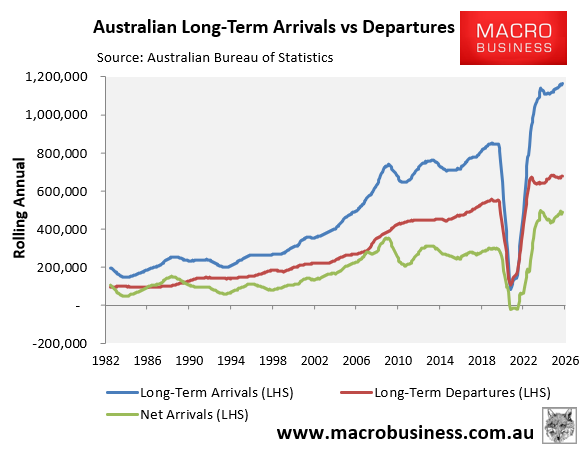
The annual breakdown of arrivals and departures is provided below. In the year to March, a record high of 1,164,540 persons arrived in Australia on a long-term or permanent basis, which was partially offset by 678,240 long-term and permanent departures, slightly fewer than the record high.
Despite variations in raw numbers, the NPLT arrivals series had maintained a consistent correlation with the official quarterly net overseas migration (NOM) for over three decades. However, this relationship has collapsed over the past two years.
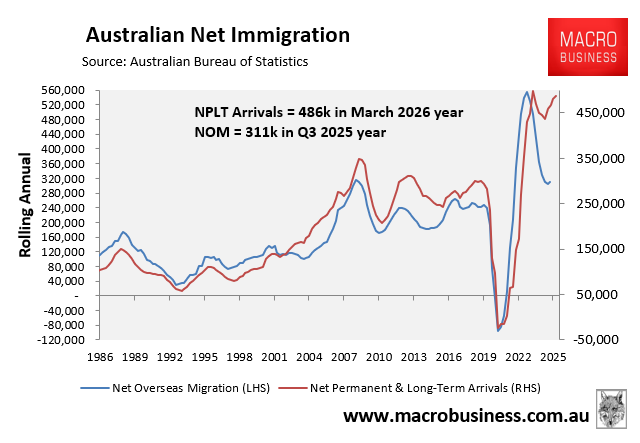
NOM is based on observed behaviour rather than visa type or claimed intent, and it includes people who relocate for at least 12 months over a 16-month period.
NPLT arrivals are calculated based on the intended length of stay provided on passenger cards and are not adjusted for actual duration.
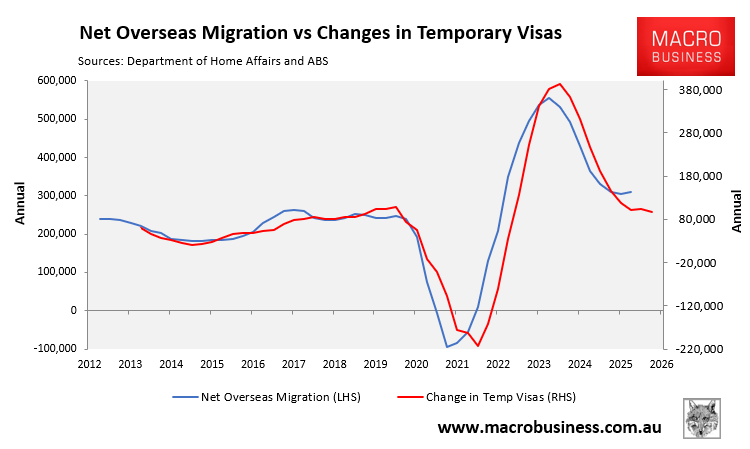
As illustrated above, the annual number of NPLT arrivals has increased considerably since March 2025, whereas the number of NOM fell to a still-historically high 305,000 in Q2 2025 before somewhat rebounding to 311,000 in Q3 2025 (the most recent data available).
On the other hand, separate temporary visa data from the Department of Home Affairs suggests that NOM should trend lower:
The rental market tells a different story, with vacancy rates remaining at historical lows, suggesting that demand via immigration is running ahead of supply:
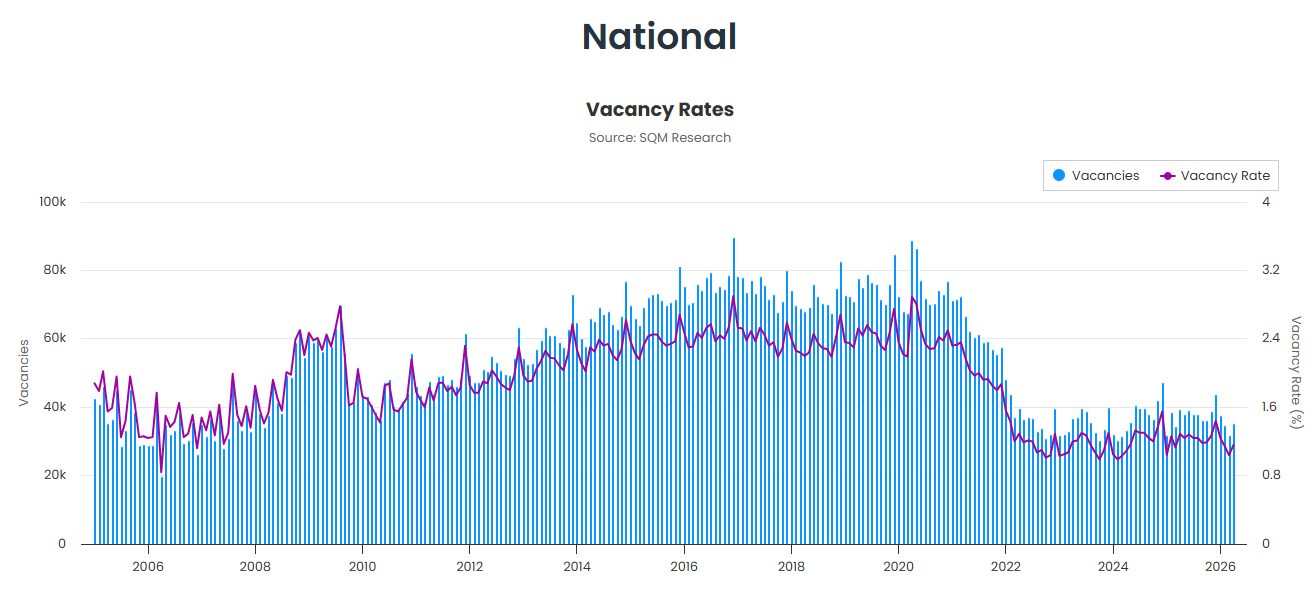
Source: SQM Research
Cotality’s advertised rents also continue to grow significantly faster than income, increasing by 5.7% in the year to April 2026.
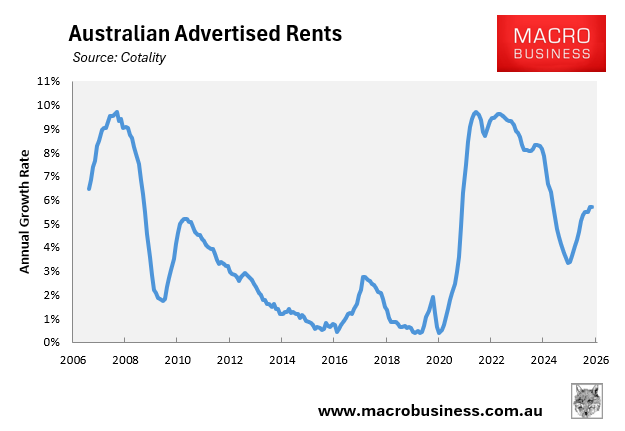
In other words, the rental market remains zipped tight.
